Seven podcasts mentioned Iran this week.
None of them were talking about the same Iran.
A historian saw a 2,500-year-old empire. A journalist saw a regime in an autocracy axis. A market analyst saw a variable. A combat-sports host saw a nuclear timeline. A comedian saw a punchline. This is what the same week sounds like across five different lenses.
Iran is the ground itself — a 2,500-year-old plateau that keeps remembering.
For Tom Holland and Dominic Sandbrook on The Rest Is History, "Iran" is the Achaemenid heartland. They never call it Iran. They call it Persia, and they walk through the same flat ground that favored Persian cavalry against Athens in 490 BC — ground every modern invader still has to cross. The framing flattens 2,500 years into a single fault line.

"The Persian Empire originated in modern-day Iran. The plateau where the events involving Darius take place."
— summary, The Rest Is History · Ep. 668
Iran is a node in an autocracy axis — and the US miscalculated it.
For Anne Applebaum on The Diary of a CEO, Iran is not geography and not religion. It's a member of a network — Russia, China, Iran, smaller satellites — whose mutual interest is keeping liberal democracies from finishing the post-1945 project. The clip lands on a specific claim: that the US president underestimated how decentralized and resilient the Iranian regime actually is.

"A complex, embedded regime with a decentralized defense system that was miscalculated by the US president."
— mention context, Anne Applebaum on Diary of a CEO
Iran is a variable in a different conversation entirely.
On The Prof G Pod, Alice Han and James Kynge spend most of the episode on Trump-Xi summit choreography and the Shanghai Composite. Iran enters as a single line — a "crisis point looming" — and exits. Same country, but here it's a sub-variable in a much larger trade story. Not the protagonist. Background risk.

"Mentioned in the context of a crisis impacting global relations."
— mention context, Prof G Pod · Trump-Xi episode
Iran is a nuclear timeline with a religious mission.
Gad Saad and Joe Rogan on JRE spend over half an hour on Iran, and the entire frame is threat. The arguments move fast: eschatology and nuclear proliferation, then debate over the credibility of intelligence on Iranian capabilities, then Netanyahu's strategic calculus. There is no "Iran the country" here — only the regime, and what it will or won't do.
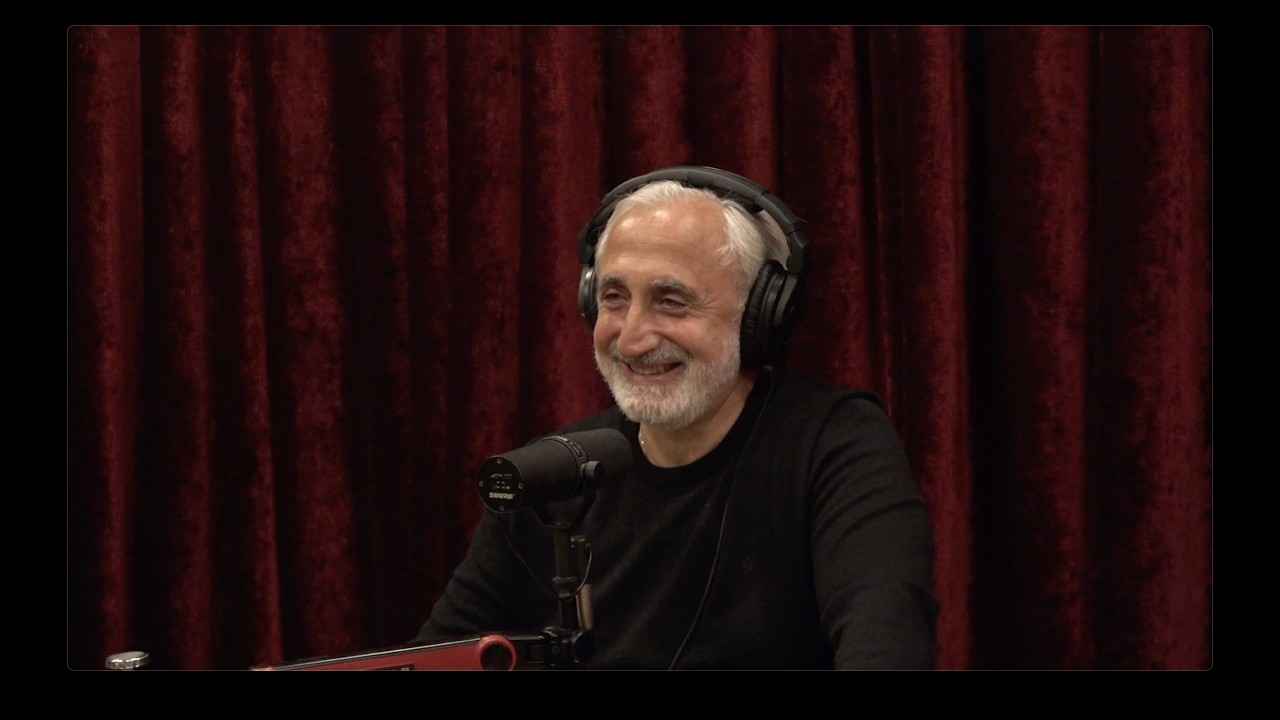
"Discussed as a regime with an eschatology that poses a nuclear proliferation threat to global peace."
— mention context, Joe Rogan + Gad Saad on JRE #2497
Iran is a comparison class for things that should be bombed.
On The Tim Dillon Show, Iran shows up not as policy but as yardstick. Tim Dillon, riffing on a hantavirus outbreak aboard a cruise ship, suggests the ship should be destroyed — and reaches for the Iranian nuclear program as the natural reference point. The same vocabulary as the hawk's lens. None of the same weight.

"Used as a comparison for geopolitical threats that the speaker believes should be bombed."
— mention context, The Tim Dillon Show · Ep. 495
What you only see in the aggregate.
No single one of these framings is wrong. Each is internally coherent — each show's audience is being told a self-consistent story about Iran. But laid side by side, the five lenses don't share a noun. The historian's Iran is a plateau. The journalist's is a regime. The market analyst's is a risk premium. The hawk's is a countdown. The comedian's is a punchline.
Subscribe to one podcast and you get one Iran. Subscribe to seven and you get a country that doesn't quite cohere — and a glimpse of the thing that's actually true: that the same news event refracts into five different stories before it reaches your week.
This page is itself the artifact: it can only exist because every clip above came from a single, cross-show segment index. No podcast told this story. Their aggregation did.